The Shopping Cart Becomes a Computer: Should Afasin Build Its Own?
Hanshow, shopreme and Lucky Cart unveiled a smart cart in Paris that scans, recommends, processes payment and reports data in real time. Already tested by Auchan, Leclerc, Système U and Intermarché — should Afasin build its own?
On September 15, 2026, in Paris, three companies announced something that sounds minor but changes the nature of an object nearly a century old: the supermarket shopping cart. Hanshow, shopreme, and Lucky Cart unveiled a smart cart solution set for commercial rollout in 2026, in France and internationally. This isn't just another gadget — it's a sign that the physical store is finally catching up to the data level of e-commerce.
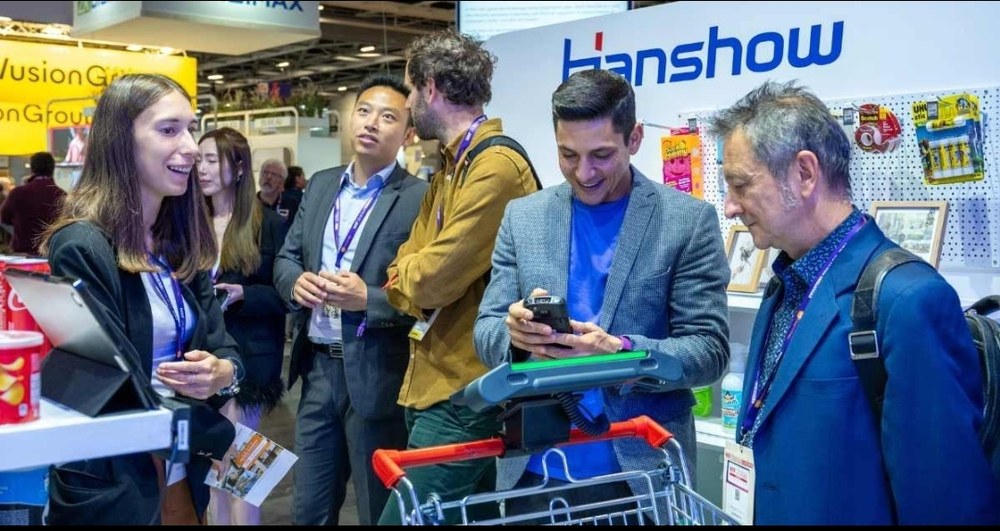
The solution presented at NRF Retail's Big Show Europe, Paris Expo Porte de Versailles, September 15-17, 2026.
The announcement: a cart designed as a system, not a screen
The announcement took place at NRF 2026: Retail's Big Show Europe, at Paris Expo Porte de Versailles (September 15-17, 2026) — Europe's leading retail innovation event, with over 12,000 professionals and 500 exhibitors expected. At the Hanshow booth, the CEOs of shopreme (Florian Burgstaller) and Lucky Cart (Romain Charles) jointly presented what few connected-cart solutions had managed so far: combining hardware, POS software, and customer data into a single object.
What this cart actually does
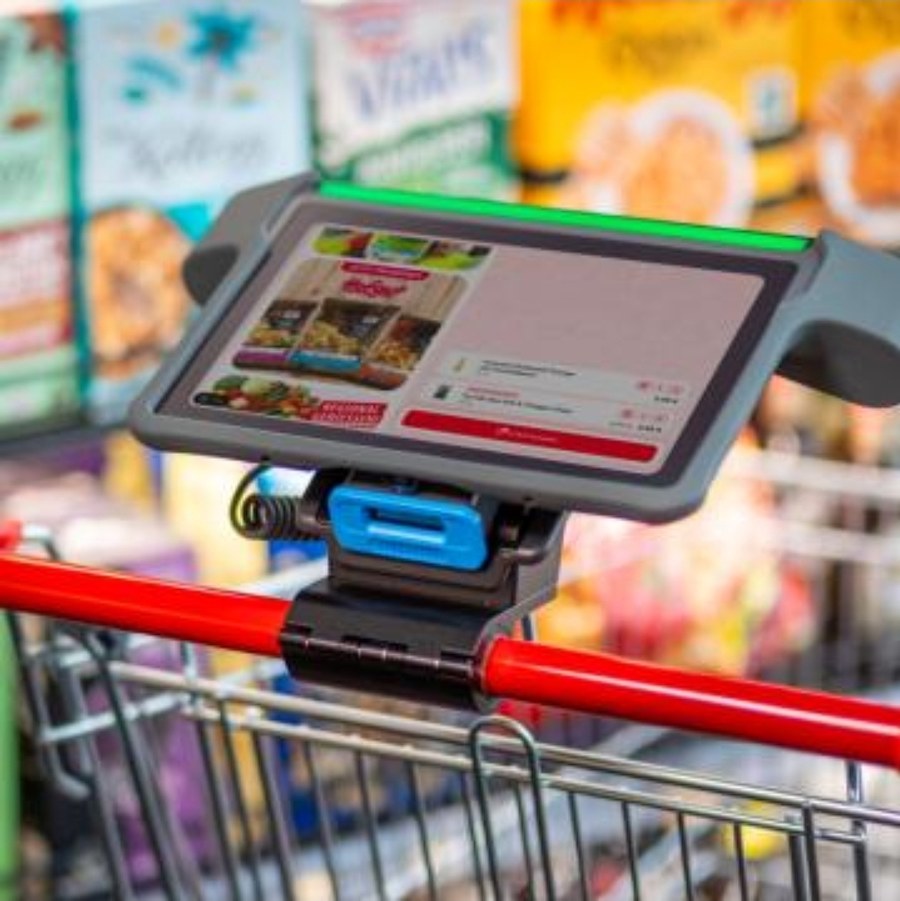
A tablet attaches to an ordinary cart and handles, in a single interface:
- scanning products while shopping (payment directly on the cart, no checkout line needed)
- in-store navigation and product search
- personalised real-time recommendations and promotions
- AI-based anomaly detection and loss prevention
- real-time reporting of out-of-stock shelf items
- advertising (Retail Media) displayed directly on the cart's screen
The system can connect to a store's existing POS software via shopreme — so it doesn't replace what's already there, it's a layer added on top of it.
The real shift: the cart becomes the store's information system
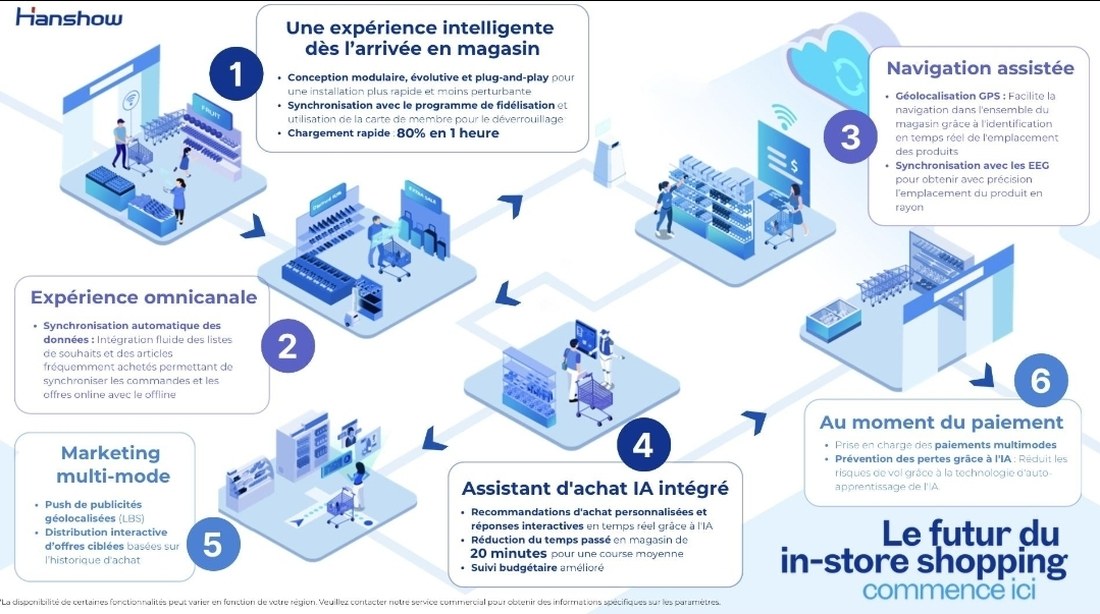
The classic customer journey had four steps: customer → cart → shelf → checkout. With this kind of solution, it becomes: customer → smart cart → data → recommendations → promotions → payment → loyalty → POS software → inventory. The cart is no longer just a container — it becomes the collection point for all shopping-journey data, in real time, before the customer even reaches the checkout.
Already being tested by major French retailers
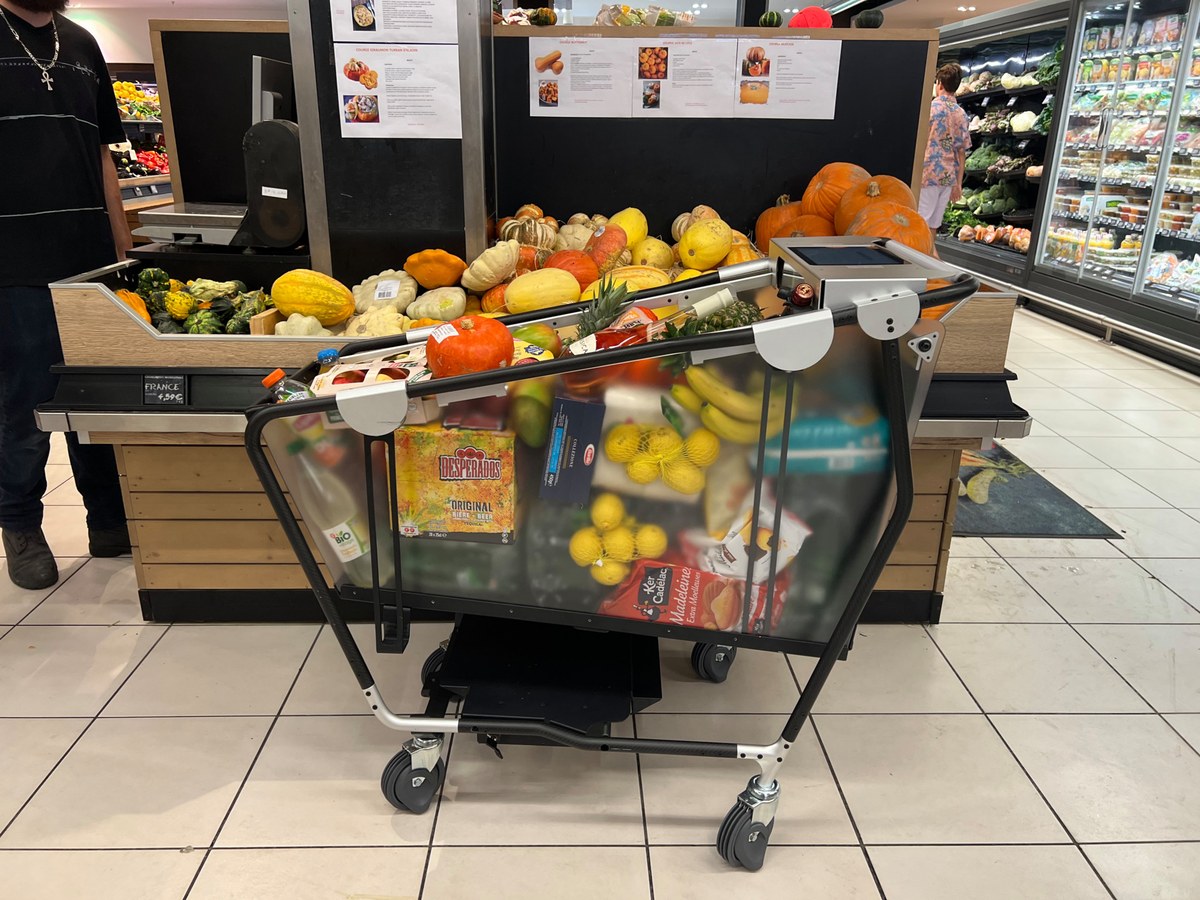
This isn't a theoretical announcement. Tests are already underway or planned at Auchan, E.Leclerc, Système U, and Intermarché — the latter already trialling a competing connected cart (Shopic) in a pilot store in Provins. Auchan Romania was the first store in the group to be equipped, at its Drumul Taberei hypermarket in Bucharest. Meanwhile, Carrefour Belgium is separately testing Instacart's Caper Cart in two stores in Waterloo, with automatic weighing of fresh produce and a real-time budget display.
In other words: four of the biggest French retailers and two international groups are simultaneously testing variants of the same idea, in the same year. That's not a weak signal.
What this means for Afasin
The Afasin merchant network has a trait that general-purpose hypermarkets don't: customers who come looking for specific products (Afro-Caribbean groceries, cosmetics, imported goods), often with concrete questions — "what do I cook this cassava with?", "which hair product for my hair type?". That's exactly the kind of question a cart-integrated shopping assistant can answer the moment it comes up, not later, on a website the customer will never visit.
An Afasin Smart Cart wouldn't need to reinvent the technology — the hardware already exists from several suppliers. The value would be in what goes into it: the Afasin catalogue, an ACAC member price shown directly on screen, Afro-Caribbean recipe suggestions tied to the scanned product, targeted supplier promotions, and syncing with the loyalty programme already on the platform.
The real business model: Retail Media
The most interesting point for a network like Afasin isn't the customer experience — it's the revenue line that comes with it. A bissap brand, a hair-care brand, or a food supplier could pay to be recommended at the exact moment a customer scans a complementary product. It's the same model as advertising on Amazon or e-commerce platforms, transposed inside the physical store. For a network of independent shopkeepers, that's a revenue stream that barely exists in any Afro-Caribbean retail point today.
Conclusion
The smart cart is no longer a trade-show concept: four major French retailers are testing it the same year it launches commercially. The question is no longer "will this technology arrive?" but "who, in Afro-Caribbean retail, will deploy it first?" A structured network like Afasin — with an existing catalogue, supplier base, and loyalty programme — starts with a real head start over any standalone shop.
Sources: Hanshow / shopreme / Lucky Cart press release (September 15, 2026), NRF 2026: Retail's Big Show Europe (Paris Expo Porte de Versailles), Olivier Dauvers analysis, RetailDetail (Carrefour Belgium / Instacart Caper Cart).