Labelling, cosmetics rules, barcodes, pricing, wholesalers and grocery shops: what founders of Afro-Caribbean brands based in Europe need to prepare before reaching the shelves.
Grandma's hot pepper sauce, cassava flour, shea butter, bissap juice, Caribbean spices… More and more entrepreneurs from the diaspora are launching their own brands in France, Belgium and elsewhere in Europe. The market is real: thousands of Afro-Caribbean grocery shops, "world food" aisles in supermarkets, and loyal customers looking for quality products.
But between a good recipe and a product on the shelf, there are steps you cannot skip. Here is what shop owners expect from you, and what the law requires.
1. Be compliant before you sell
Food products
- Register your business: in France, any manufacturing or processing of food must be declared to the DDPP (local consumer protection authority) of your département. If you handle products of animal origin (meat, fish, dairy), you may need a sanitary approval (agrément sanitaire).
- Master food hygiene: HACCP plan, batch traceability, suitable premises. You can also use a contract manufacturer that is already compliant: often the fastest way to get started.
- Have your products tested: shelf life, nutritional values and, for some raw materials (groundnuts, chilli, palm oil, dried fish), contaminants such as aflatoxins or pesticides.
Cosmetics (body, hair and skin care)
Cosmetics are tightly regulated in Europe (Regulation (EC) No 1223/2009). Before selling anything, you need:
- a Responsible Person established in the European Union;
- a Product Information File including a safety assessment signed by a qualified expert;
- a notification on the EU CPNP portal;
- the ingredient list in INCI names on the packaging.
Beware of skin-lightening products: hydroquinone, mercury and corticosteroids are banned in cosmetics. These products are heavily checked by the French consumer authority (DGCCRF) and customs, and a shop owner selling them also faces penalties. No serious grocery shop will take that risk.
2. A compliant label, in the local language
For food (Regulation (EU) No 1169/2011), the label must be in the language of the country of sale (French in France) and show at least:
- the name of the product;
- the list of ingredients, with allergens highlighted (bold, colour…);
- the net quantity;
- the date mark ("use by" or "best before");
- storage conditions and, if needed, instructions for use;
- the name and address of the business responsible in the EU;
- the nutrition declaration;
- the batch number;
- the country of origin when leaving it out could mislead customers, or when it is mandatory (some meats, honey, fruit and vegetables…).
A badly labelled product can be removed from the shelves during an inspection, and it is often the shop owner who pays the price. A flawless label is therefore a selling point with grocery shops.
3. The essentials to get listed
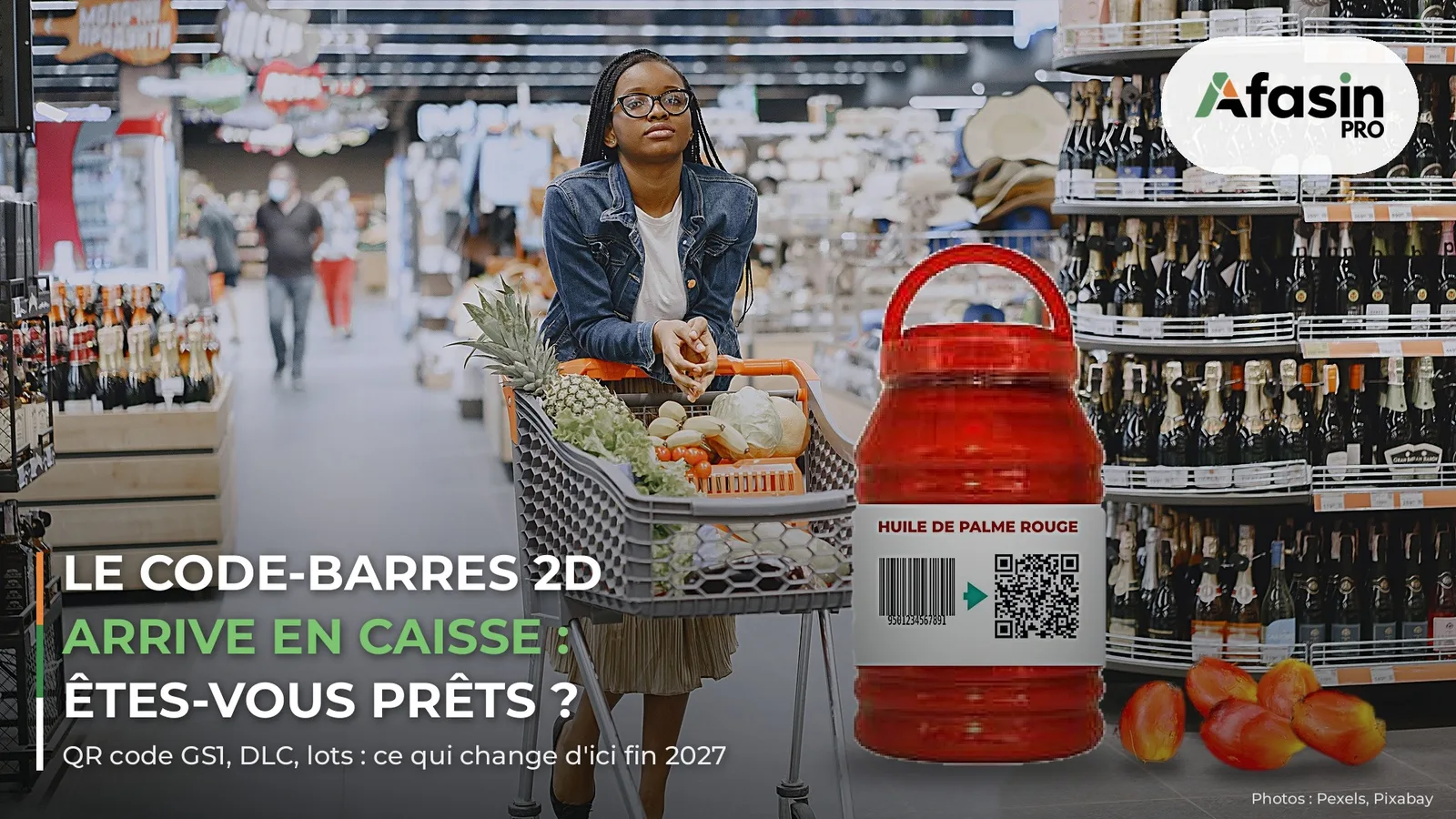
- An EAN barcode from GS1 (the official body): wholesalers and most shops with a till system need one. Avoid cheap codes resold online, which are often rejected.
- A complete product sheet: photos on a white background, weight, dimensions, case size (units per carton), cartons per pallet, shelf life, ingredients and allergens.
- Enough shelf life: distributors often refuse a product that has less than two thirds of its shelf life left on delivery.
- Product liability insurance, which distributors increasingly ask for.
- A registered trademark: with INPI for France, or EUIPO for the whole European Union. Never launch a name without checking it is free.
4. Build a price that leaves a margin for everyone
The most common mistake: setting your selling price without counting the middlemen. Between you and the end customer there is often a wholesaler and always a shop owner, and each one needs to make a living.
| Step | Example |
|---|
| Your cost price (product, packaging, transport) | €1.20 |
| Your selling price to the wholesaler | €1.80 excl. VAT |
| Wholesaler's price to the shop (margin of about 20–25%) | €2.30 excl. VAT |
| Shelf price (multiplier of 1.4 to 1.6 in grocery shops, 5.5% VAT included) | about €3.50 incl. VAT |
These figures are only indicative, but remember the principle: the shelf price is often 2 to 3 times your cost price. If that price is too high compared with competing products, rework the recipe, the format or your costs before launching.
5. Choose your sales channels
- Specialist wholesalers (in France, Belgium, the Netherlands): they open hundreds of shops to you at once, but ask for volumes, tight prices and sometimes promotions.
- Selling directly to grocery shops: more margin for you, but a lot of canvassing and small deliveries. Ideal to start in one city and prove the product sells.
- Supermarkets (world food aisles): large volumes, but slow listing, high requirements and back margins to negotiate. Aim for them once the brand is established.
- Online sales and social media: perfect for building awareness and testing new products, but delivery is expensive for heavy goods.
6. Make shop owners want to stock you
A shop owner has little shelf space. To get them to choose your product:
- Offer a smaller first order or sale-or-return to limit their risk.
- Bring samples and organise in-store tastings.
- Provide point-of-sale material (posters, displays) and content for their social media and WhatsApp.
- Tell your story: where the recipes, ingredients and know-how come from. That is what diaspora customers are looking for.
- Be reliable: stock available, on-time deliveries, clear invoices. Running out of stock loses you shelf space.
- Get your community involved: when your customers ask for your product in their local shop, the shop owner ends up ordering it.
7. Selling to other European countries
When you sell to a grocery shop in Belgium, Germany or the Netherlands, you usually invoice without VAT if your customer has a valid intra-EU VAT number. It is the same mechanism described in our article on buying from a wholesaler in the Netherlands, seen from the seller's side. Also remember to adapt your label to each country's language.
Key takeaways
- Register your business and have your products' safety checked before selling.
- A compliant label and a GS1 barcode are essential to get into wholesalers and shops.
- Build your price starting from the shelf price: everyone must make money.
- Start locally, prove the product sells, then move to wholesalers.
- Look after your relationship with shop owners: they are your best ambassadors.
This article gives general information, up to date on the date of publication. For your specific situation, contact your local DDPP, a food or cosmetics regulatory expert, or your chamber of commerce.
Cover photo: Pexels (Pexels licence).