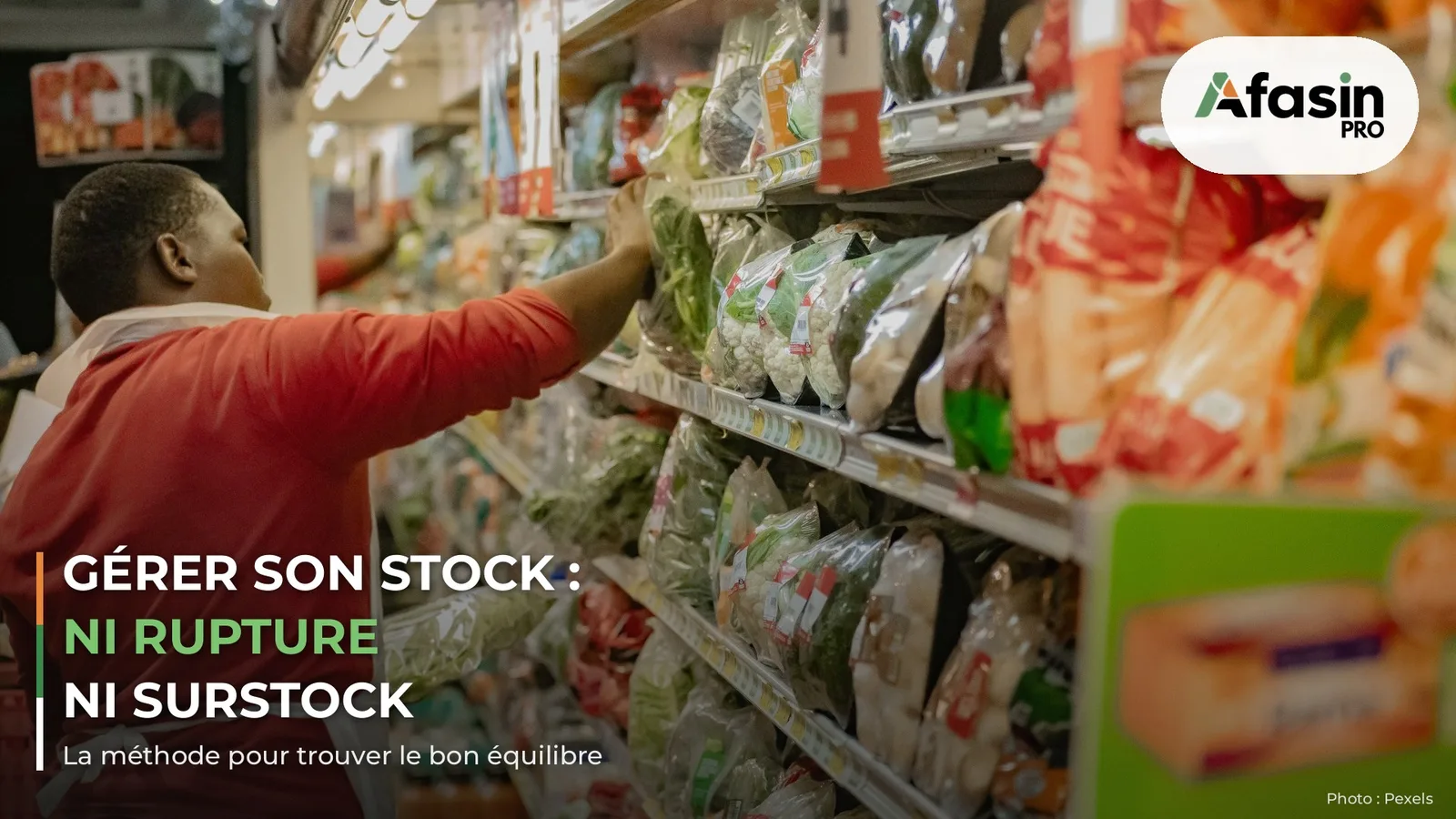
Stockouts mean lost sales and unhappy customers. Overstocking means tied-up cash and the risk of spoilage. Finding the right balance is an art. Here's the method.
Too little stock → stockout → the customer goes to a competitor instead. Too much stock → cash tied up → products expire → straight loss.
The goal of good inventory management is to always keep just enough — no more, no less. It sounds obvious, but few shop owners have a structured method to achieve it.
This is the number of times an item "turns over" during a given period.
Turnover = Quantity sold over the period ÷ Average stock over the period
High turnover (a fast-selling product) → order regularly in small quantities. Low turnover → cut back your restocking, or remove the product from your range.
This is the "buffer" stock you keep to absorb unexpected events: a delayed supplier, an unexpected demand spike, a cancelled order. It's calculated as follows:
Safety stock = (Maximum supplier lead time − Average supplier lead time) × Average daily sales
Example: if your supplier normally delivers in 7 days but can take up to 14, and you sell 10 units a day → safety stock = 7 × 10 = 70 units.
This is the stock level at which you trigger a new order — before you dip into your safety stock.
Reorder point = (Average supplier lead time × Daily sales) + Safety stock
Not all products deserve the same attention. The ABC method segments your range:
This is the main challenge for Afro-Caribbean grocery and food shops. A few rules:
You don't need expensive software to get started:
Even with good software, discrepancies happen (theft, breakage, entry errors). Do a full stocktake at least once a quarter, and rolling counts (by shelf) every week. It's the only way to know what you actually have in stock.
Cover photo: Pexels (Pexels licence).
Till, stock, wholesale prices and online sales, in one app.