Unsold Food Donations: The Guide to Giving Safely (Without Being Required To)
Donating unsold food is possible, regulated — and for most Afro-Caribbean shops under 400 m², entirely voluntary. Best-before vs use-by dates, agreements, withdrawal notes, a 60% tax reduction: the full step-by-step guide.
A bag of rice past its "best before" date, a dozen jars of peanut paste nobody bought, a pallet of drinks nearing the end of its shelf rotation. The most common reflex is to throw it away, or mark it down hoping to limit the loss. There's a third option, regulated and safe, that most shopkeepers never explore: donation. It isn't complicated or risky — as long as a few precise rules are followed.
Not a legal obligation for most Afasin shops
French law (the Garot Law of 11 February 2016) requires food stores larger than 400 m² to sign a donation agreement with an authorised association, under penalty of a fine. But the vast majority of shops in the Afasin network — grocery stores, neighbourhood shops — are below that threshold. Which means something important: donating is not a legal requirement for you — it's a choice. Small shops can voluntarily enter into a donation agreement with an authorised organisation that requests one, under exactly the same safety framework as large retailers. In other words, you have access to the same tool, without the obligation — which makes it a genuine image-building move rather than an administrative chore.
Which products can be donated?
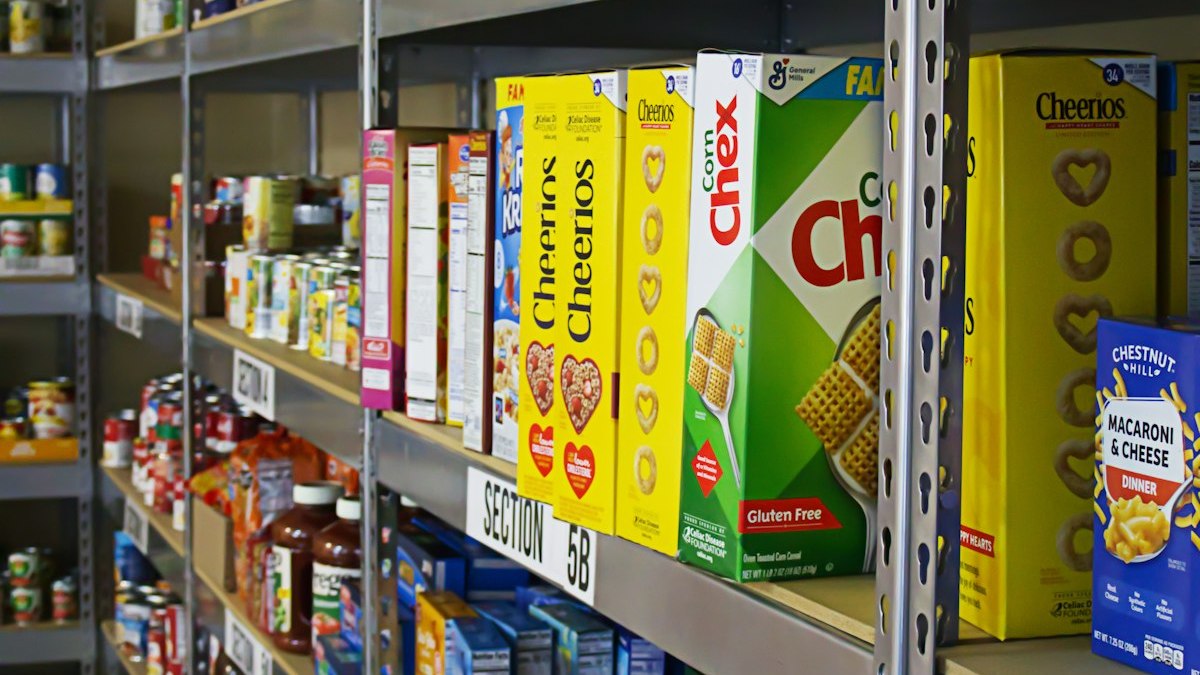
This is where Afro-Caribbean grocery stores have a real advantage: a large share of their catalogue is dry or processed, long-shelf-life goods, perfectly suited to donation.
- rice, cornmeal, flour
- processed cassava, packaged attiéké
- peanut paste, oils, sauces
- canned goods, spices, biscuits, cereals
- powdered milk, drinks
- frozen goods (subject to cold-chain conditions)
But a passed date is never, on its own, enough to decide. Two types of dates need to be distinguished, never confused.
Best-before and use-by dates: two completely different logics
The best-before date ("best consumed before"), which applies to rice, pasta, canned goods, biscuits, isn't a safety date — it indicates peak quality, not danger. A passed best-before date doesn't automatically make a product unfit for donation.
The use-by date ("consume by"), which applies to fresh and frozen products, follows a much stricter safety logic. For these products, donation normally needs to happen at least 48 hours before expiry, unless the association can itself demonstrate it's able to redistribute the product before that deadline.
Passed best-before date ≠ automatically bin. But passed best-before date ≠ automatically donation either. Every product has to be checked individually — intact packaging, no break in the cold chain, readable labelling.
Sorting remains your responsibility
Before any donation, it's up to the shopkeeper to check the packaging condition, the product's general state, the date, storage conditions, and the batch if needed. The association, for its part, retains the right to refuse any product it considers unfit, poorly preserved, or failing to meet hygiene requirements — it's a two-way safeguard, not a one-way formality.
The agreement: the piece that protects everyone
This is the central piece of the whole system. A donation agreement, set up with an authorised association, must specify: who sorts the products, who collects them, how they're transported and stored, who is responsible for what, how traceability is ensured, and how the donation is logged. France's Ministry of Agriculture provides ready-to-use model agreements.
At each handover, a withdrawal note must be drawn up: it lists the products, the quantities, and carries the statement "goods checked and compliant" added by the association after its own inspection. This document is your proof — keep it carefully, including for what comes next.
A concrete example
A shop identifies on its shelves: 12 jars of peanut paste and 20 bags of cornmeal nearing their best-before date, 8 bottles of red palm oil and 15 packs of biscuits past their best-before date, 5 frozen fish with a use-by date in 10 days. Rather than lumping everything into one "donation" crate, the shopkeeper separates them: what's still sellable goes to a promotion or clearance, what's compliant but unsellable goes to donation, what no longer qualifies is excluded. A list precisely records each donated product and quantity. The association collects, inspects, and signs the withdrawal note. The shopkeeper keeps the proof.
What about the tax reduction?
This is the second benefit, often overlooked. Food donations to an eligible organisation qualify for a tax reduction under the corporate patronage scheme (Article 238 bis of the French General Tax Code), worth 60% of the donation's value. One technical point worth knowing: this value is calculated on the product's cost price (what it cost you), not its selling price. But a caveat: donating to just any organisation isn't enough — the receiving body must be eligible for the tax scheme and able to issue the receipt required by the tax authorities.
The opportunity for the Afasin network
This regulatory framework, well handled, can become a real management tool rather than just a box to tick. A network like Afasin could connect its shopkeepers with locally authorised associations, centralise agreement and withdrawal-note templates, and eventually — with the stock management tools already built into Afasin System — automatically alert a shopkeeper when products are approaching their expiry, then offer three options in order: markdown, clearance, donation. What's today a regulatory constraint for large retailers becomes, for an Afro-Caribbean shop under 400 m², a chosen lever: less dead loss, real proof of community commitment, and a tax reduction on top.
To go further on stock management upstream — avoiding reaching this point in the first place — see our guide on stock management and overstocking.
Sources: French law no. 2016-138 of 11 February 2016 (Garot Law), Articles L.541-15-5 et seq. of the French Environmental Code, Article 238 bis of the French General Tax Code, model food donation agreements from the French Ministry of Agriculture and Food Sovereignty (agriculture.gouv.fr).