From Cassava Stick to 50g Bar: The Business Lesson Behind Cameroon's Bobolo
A cassava stick sold by the roadside became a calibrated, packaged 50g bar, sold for 500 CFA francs per 300g — designed for the diaspora. Cameroon's Bobolo is a lesson for any shopkeeper selling a traditional product loose, with no structure.
Cassava stick is a street food, sold for generations wrapped in leaves, with no fixed weight, no brand, no standard price. In Cameroon, one entrepreneur took that same product and turned it into a 50g bar, calibrated, packaged, sold in a pack of 6 at a fixed price. Nothing changed in the recipe. Everything changed in how it's sold — and that's exactly what should interest any shopkeeper today selling a traditional product loose, by weight, with no packaging.
The story: from street know-how to a processing unit
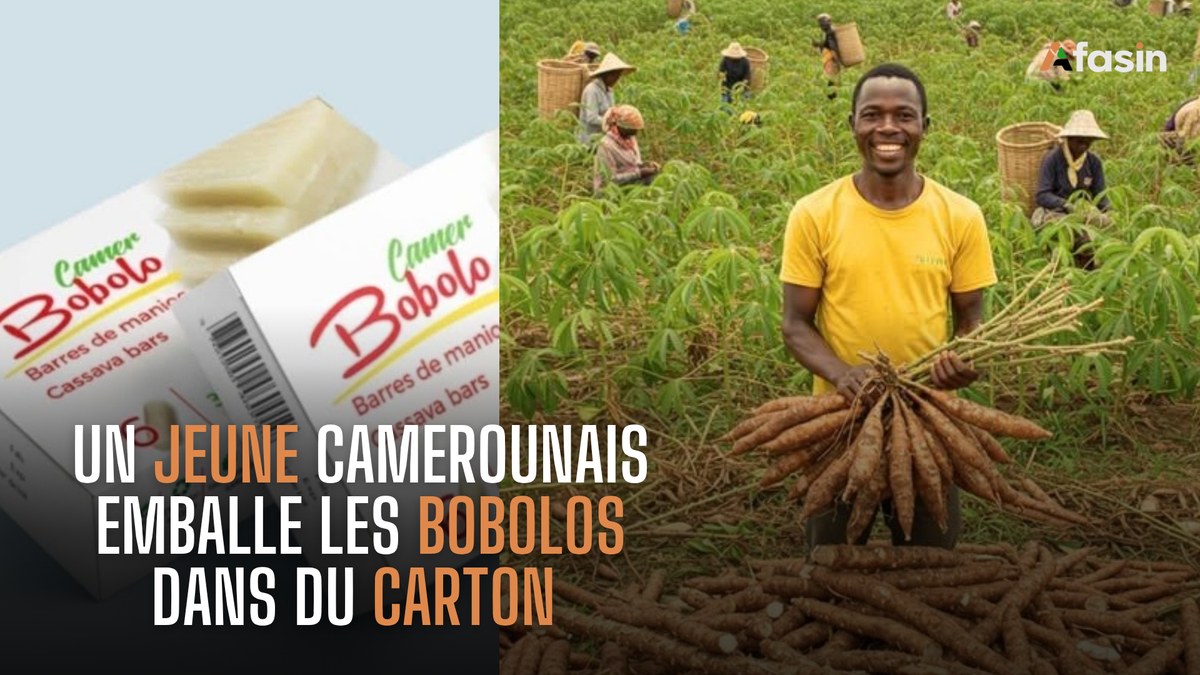
Justin Owona Bodo, a Cameroonian entrepreneur, founded Sodema, a cassava processing unit based in Mfou, about 30 km from Yaoundé. The traditional process hasn't changed: the cassava paste soaks for 3 to 5 days, is crushed, wrapped in reed leaves, then steam-cooked. What changes is what comes after: the finished product is repackaged into 50g bars, six per pack (300g), sold for 500 CFA francs, in white-and-green packaging designed to look like any mainstream consumer product.
The real product isn't the recipe — it's the buying experience
This is the core of the lesson. The traditional cassava stick and the Bobolo bar are, at heart, the same food. What separates them is that one is sold "by approximate weight, no guarantee," and the other is sold with a stated weight, a fixed price, a date, hygiene visible on the packaging. A customer who doesn't know the seller can buy the second one with their eyes closed — they can't do that with the first.
That's exactly the difference between a product sold through a trusted local network, and a product sellable to someone who has never set foot in the shop.
The market choice: targeting the diaspora from day one
Sodema didn't design this product for the street market it replaces. The stated targets are the Cameroonian diaspora and urban populations in major cities — buyers willing to pay more for a familiar product, but who in exchange demand a standardised, transportable, shelf-identifiable format. It's the same reasoning that explains why some African and Caribbean products sell far better packaged and exported than at their market of origin: the value doesn't come only from the product, it comes from its ability to travel to a customer who has no other way to buy it.
The constraint that's always underestimated: certification
Before any large-scale commercial launch, Sodema had to obtain a quality certification from a reference food laboratory. This isn't a minor administrative formality — it's the entry condition into formal channels (large retail, export, online platforms). A product without certification stays stuck in the informal market, regardless of its actual manufacturing quality. It's the same principle we've already covered regarding cosmetics: compliance isn't a barrier to trade, it's the door into the markets that pay the best.
Financing: what separates artisanal from industrial
The project was financed through a public support programme for young entrepreneurs (102 billion CFA francs over three years, launched in 2016), with an initial investment of over one million CFA francs for equipment: a laminator, moulds, packaging machines, and collection logistics (wheelbarrows, tricycles). Without that capital, the recipe would have stayed a family know-how sold by the roadside. With it, it becomes a reproducible product line at constant volume — the difference between selling it yourself and one day being sold by others.
What this means for an Afasin shopkeeper
Many products sold today "loose" or "the old way" in the Afasin network — spices, flours, homemade preparations, artisanal beauty products — could follow exactly the same path: a fixed format, readable packaging, a stable price, clear traceability. It's not a question of unlimited means: it's a question of knowing which customer you're addressing. A product designed for the diaspora — designed to travel, to keep, to be bought without knowing the seller — mechanically gains access to a much larger market than a product designed only for local, in-person customers.
Conclusion
Bobolo isn't a culinary invention. It's a commercial reinvention of a product that already existed. The lesson applies to any Afro-Caribbean shopkeeper sitting on a strong traditional product sold without structure: the real opportunity is often not finding a new product to sell, but selling differently the one you already know.
Source: Justin Owona Bodo, founder of Sodema (Mfou, Cameroon) — case reported by Agripreneurs d'Afrique, "Les Bobolo: du bâton aux barres de manioc."